
Catamaran Sailing: What Changes from a Monohull
RYA training · Catamarans
A sailing catamaran offers a new way to experience the sea. These yachts now fill marinas everywhere, admired for their space, balance, and comfort at anchor. If you already sail a monohull, catamaran sailing isn’t a new world, just a new rhythm.
At first, the handling feels different and the first few manoeuvres can feel unfamiliar. That’s where our catamaran training course in Greece comes in, turning curiosity into confidence on a Lagoon 400 in the Ionian.
In short
The biggest changes in catamaran sailing are at close quarters and at anchor. Twin engines replace prop-walk, so you pivot with opposing thrust; the wide hulls carry more windage, so you plan manoeuvres earlier; and with no heel, you reef by the numbers rather than by feel. Most monohull sailors adapt within a week, which is exactly what our catamaran training course in Kefalonia is built for.
7
nights on board in the Ionian
6
days of tuition with an RYA instructor
4
en-suite cabins on the Lagoon 400
40ft
the Lagoon 400, a classic mid-size catamaran
Why cats
Why catamarans are taking over
Catamarans have become a familiar sight in marinas and harbours across the world, and for good reason. With twin hulls and generous width, a sailing catamaran offers comfort and stability for a more relaxed holiday.
Everything on one level
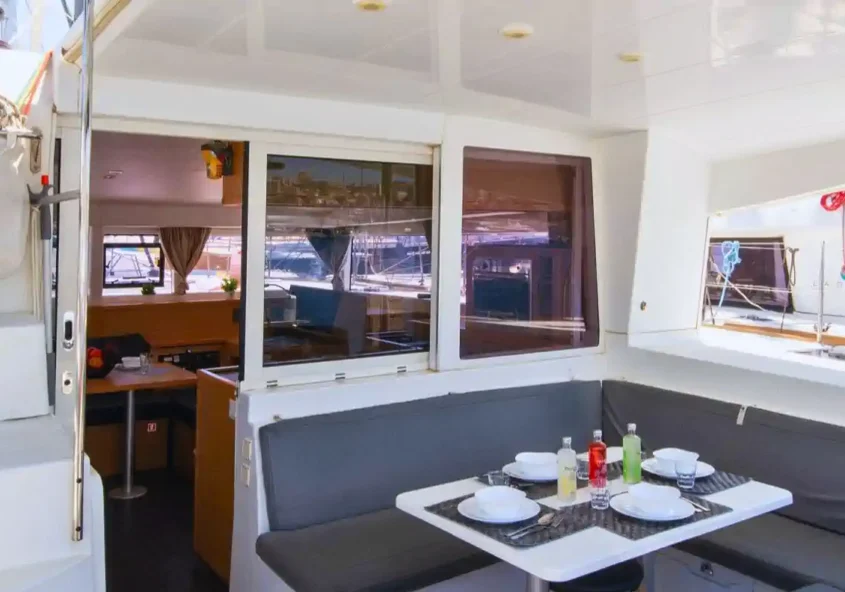
The saloon, galley, and cockpit sit on one level, so the crew moves freely and nobody is shut away below.
No heel
Guests stay comfortable and confident even when the breeze picks up, which suits families and mixed-experience crews.
Room for comforts
The extra volume allows for a generator, air conditioning, and a watermaker, adding autonomy and a touch of luxury.
Tempting for non-sailors
En-suite cabins and a steady deck make a catamaran the easiest way to bring land-lubber friends and family along.
In short, a sailing catamaran combines the pleasure of sailing with the ease of a floating villa, which is why so many newcomers and seasoned sailors now choose one.
At the helm
What actually changes when you sail a catamaran?
If you’ve spent years on monohulls, the first time you take the helm of a sailing catamaran can feel strange. Everything looks familiar, yet the handling has its own logic. Here is how the main differences compare.
On a monohull
What you’re used to
- One engine, and prop-walk to work with in reverse
- The boat heels, so you feel when it’s time to reef
- You anchor from the bow
- Your pivot point is easy to judge from the wheel
On a catamaran
What changes
- Twin engines: opposing thrust pivots you neatly on the spot
- No heel, so you reef earlier, by the wind speed rather than by feel
- You anchor from the foredeck between the hulls
- A raised helm with excellent visibility, but different pivot points
The wide hulls also mean more windage and inertia, so you simply plan ahead and move with intention. Manoeuvres that felt instinctive on a monohull just need a touch more space and timing.
Reef early
Because a catamaran stays level as the wind rises, it won’t warn you by heeling. Agree your reefing points with the crew before you leave the harbour.
Once you learn where the bows sit in relation to your viewpoint, everything clicks into place. By the end of a week, the unfamiliar becomes second nature.
On the course
Catamaran sailing manoeuvres you’ll practise
Handling a yacht in open water feels very different from manoeuvring in a tight marina, and a sailing catamaran is no exception. The wide beam and twin engines demand precision, but once you understand the technique, it becomes deeply satisfying. During your week on board, you’ll practise the skills that turn theory into instinct.
Box berths and lazy lines
Coming in to busy marinas, picking up lazy lines, and settling the boat calmly alongside its neighbours.
Crosswind handling and stern-to mooring
Mediterranean stern-to mooring with the wind on the beam, the manoeuvre that worries most new catamaran skippers.
Springs and throttle control
Using springs and the two throttles together to pivot the catamaran smoothly in a tight space.
Reversing on twin engines
Steering astern with confidence, using each engine to keep the stern exactly where you want it.
Each exercise builds on the last until every movement feels controlled and deliberate. By the end of the week, mooring a large catamaran on a windy afternoon will feel like second nature.
The yacht
Real-world systems on the Lagoon 400
The Lagoon 400 is a classic mid-size catamaran with four en-suite cabins, a generator, air conditioning, and all the usual electronics. That makes it a floating classroom that mirrors the systems on many modern charter catamarans.
During the course, you’ll get hands-on experience with the real equipment, not just diagrams. You’ll learn to manage the generator and air conditioning, understand the onboard systems, and pick up the basics of troubleshooting and on-the-go fixes, so you can look after a charter yacht as if it were your own.
Where next
Where to go catamaran sailing next
Once you’ve built your confidence on the Lagoon 400, the world of catamaran sailing opens up. You can take a catamaran on several of our flotillas, with the lead crew close at hand, and we can advise on the best choices for your party.
Greece
Dodecanese flotilla
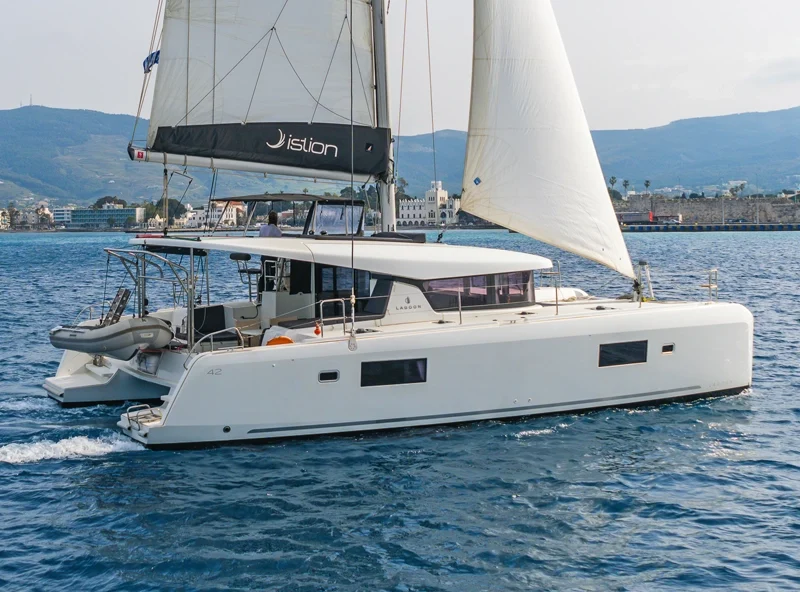
Lagoon 42 · Aegean islands
Our Dodecanese fleet includes the Lagoon 42 Melissanthi.
Greece
Northern Sporades flotilla
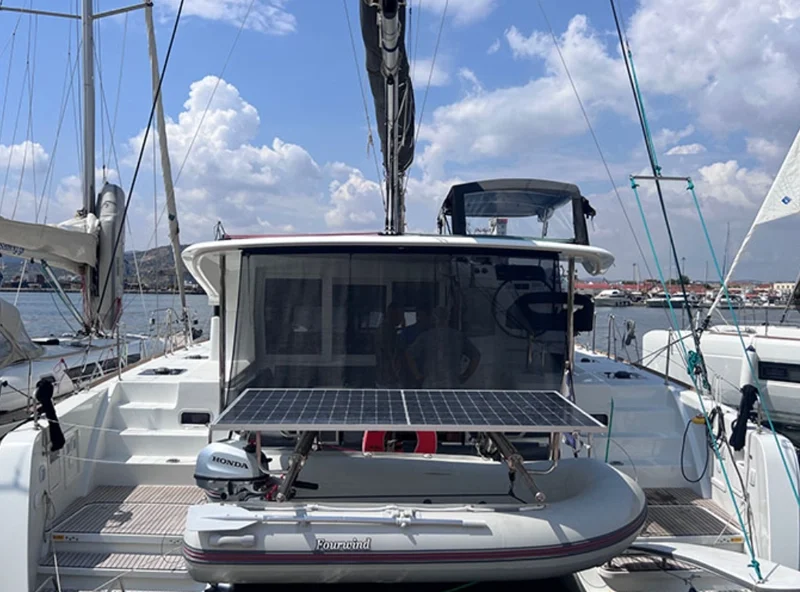
Lagoon 40 · Sporades islands
Our Northern Sporades fleet includes the Lagoon 40 Niso.
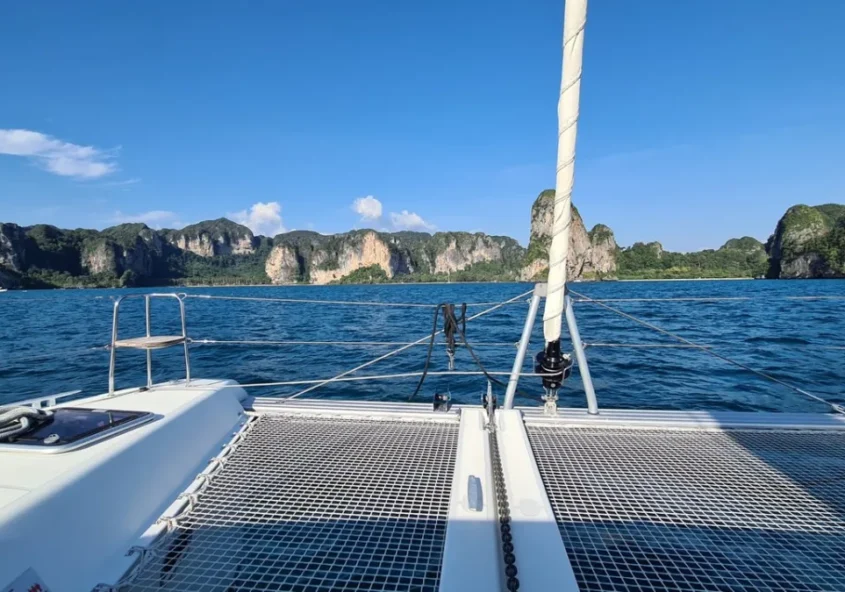
Thailand
Thailand flotilla
Lagoon 42 · Island Spirit 410
Our Phuket fleet includes the Lagoon 42 Thai Thunder and the Island Spirit 410 Fortunate Sun.
Book your place
Catamaran course dates and prices
The catamaran training course runs for seven nights, with six days of tuition from an RYA instructor. We run it from our Seafarer Training base at Agia Eufimia, on the sheltered east coast of Kefalonia, close to Kefalonia International Airport. It suits experienced monohull sailors moving across to catamarans, and you can also complete your RYA Day Skipper qualification during the week.
| 2027 start date | Sharing a cabin | Single occupancy |
|---|---|---|
| 15 May 2027 | £1,195 | £1,695 |
| 19 June 2027 | £1,750 | £2,195 |
| 24 July 2027 | £1,750 | £2,195 |
| 25 September 2027 | £1,595 | £1,995 |
| 23 October 2027 | £1,495 | £1,995 |
Prices per person, per week. Full details on the catamaran training course page.
Included
- Six days of tuition with an RYA instructor
- Seven nights in an en-suite cabin
- Mooring fees, fuel, and other yacht running costs
- Bed linen and towels
- Breakfast and a light lunch each day, drinking water, tea, and coffee
At an additional cost
- Flights and transfers from the UK, with full ATOL protection
- Dinner, usually ashore, although you can self-cater on board
Common questions
Catamaran sailing: your questions answered
Is catamaran sailing harder than sailing a monohull?
No, just different. Out on the water a catamaran is steady and level, so most sailors find it easier. The new skills are at close quarters: using twin engines instead of prop-walk, allowing for more windage, and judging the bows from a raised helm. A week of practice is usually enough to feel at home.
Who is the catamaran training course for?
It suits experienced monohull sailors who want to move across to catamarans, and qualified sailors who want professional catamaran tuition before chartering one with family or friends.
Can I get my RYA Day Skipper on the course?
Yes. The course covers all items on the RYA Day Skipper syllabus as well as catamaran handling, so you can complete the Day Skipper qualification during the week.
Where does the course run?
From our Seafarer Training base at Agia Eufimia, on the east coast of Kefalonia in the Southern Ionian. It is close to Kefalonia International Airport, and the Ionian usually offers light to moderate winds in protected waters.
What is included in the price?
Six days of RYA tuition, seven nights in an en-suite cabin, mooring fees, fuel and running costs, bed linen and towels, plus breakfast and a light lunch each day. Flights, transfers, and dinners are extra.
Ready to take the helm?
Talk to us about catamaran training
Our team can help you choose the right 2027 date and tell you how the course fits with your next charter or flotilla.
Call or email us
Monday to Friday 09:00 to 19:00 · Saturday 09:30 to 17:00

Book with confidence. Seafarer has run RYA training and sailing holidays since 1995, and every payment you make to us is financially protected: ATOL licence 9511 for holidays with flights, ABTOT member 5660 for holidays without.