Corinth Canal Sailing: What It’s Really Like
Flotilla guide · Corinth Canal
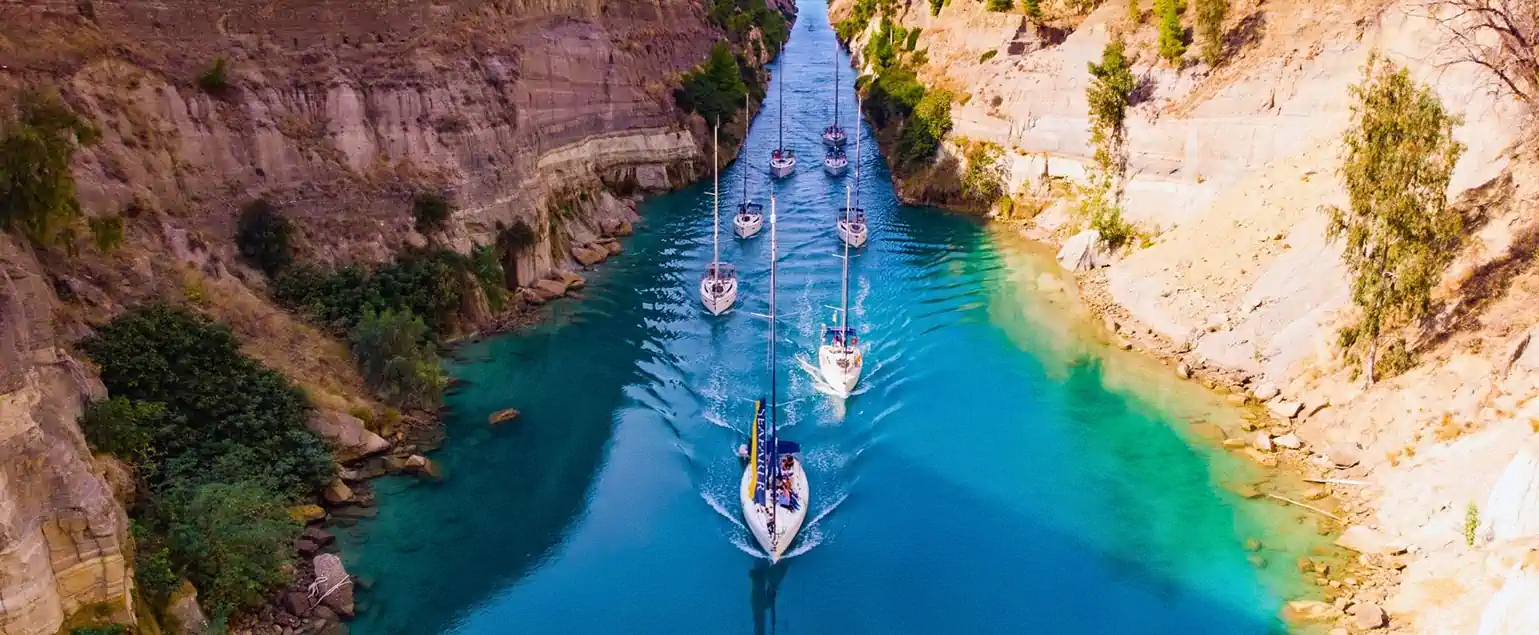
Sailing through the Corinth Canal is one of Greece’s most striking experiences on the water. For a brief stretch of the journey, towering rock walls rise on either side while bridges cross high overhead. Indeed, the passage is extraordinary in its own right.
Moreover, its 2,500-year history and position between two sailing areas make it even more significant. Here, we explore the transit experience, the canal’s history and where the journey leads next.
In short
Sailing through the Corinth Canal takes your yacht between towering rock walls and beneath road bridges high overhead, on a passage of just over six kilometres. One Seafarer flotilla took about 45 minutes, although transit times vary. On our Corinth and Saronic flotilla, both weekly routes pass through it: the Corinth Gulf route sails from Kiato to Korfos, and the Saronic route sails the other way.
45 min
one Seafarer flotilla’s transit time
6 km+
length of the canal
25 m
width at sea level
1893
the year the modern canal was completed
On this page
The transit
What sailing through the Corinth Canal feels like
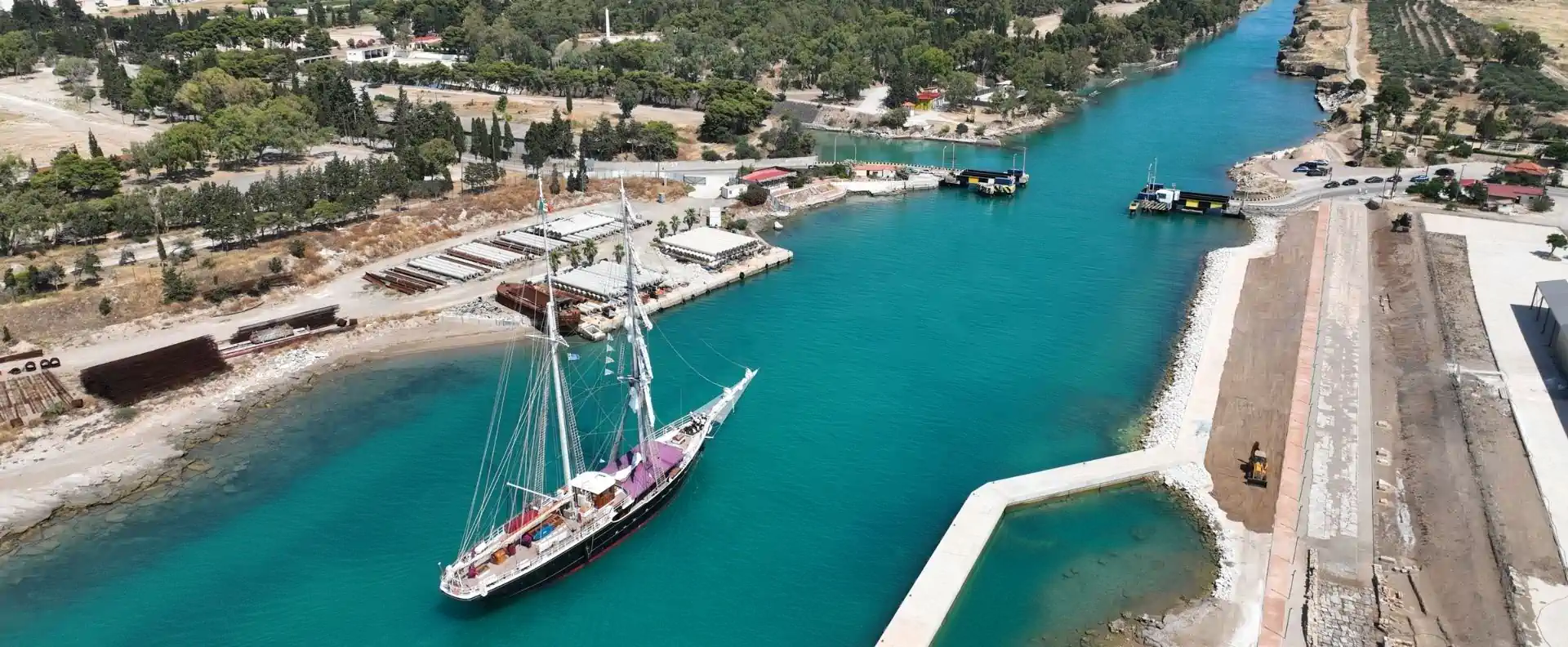
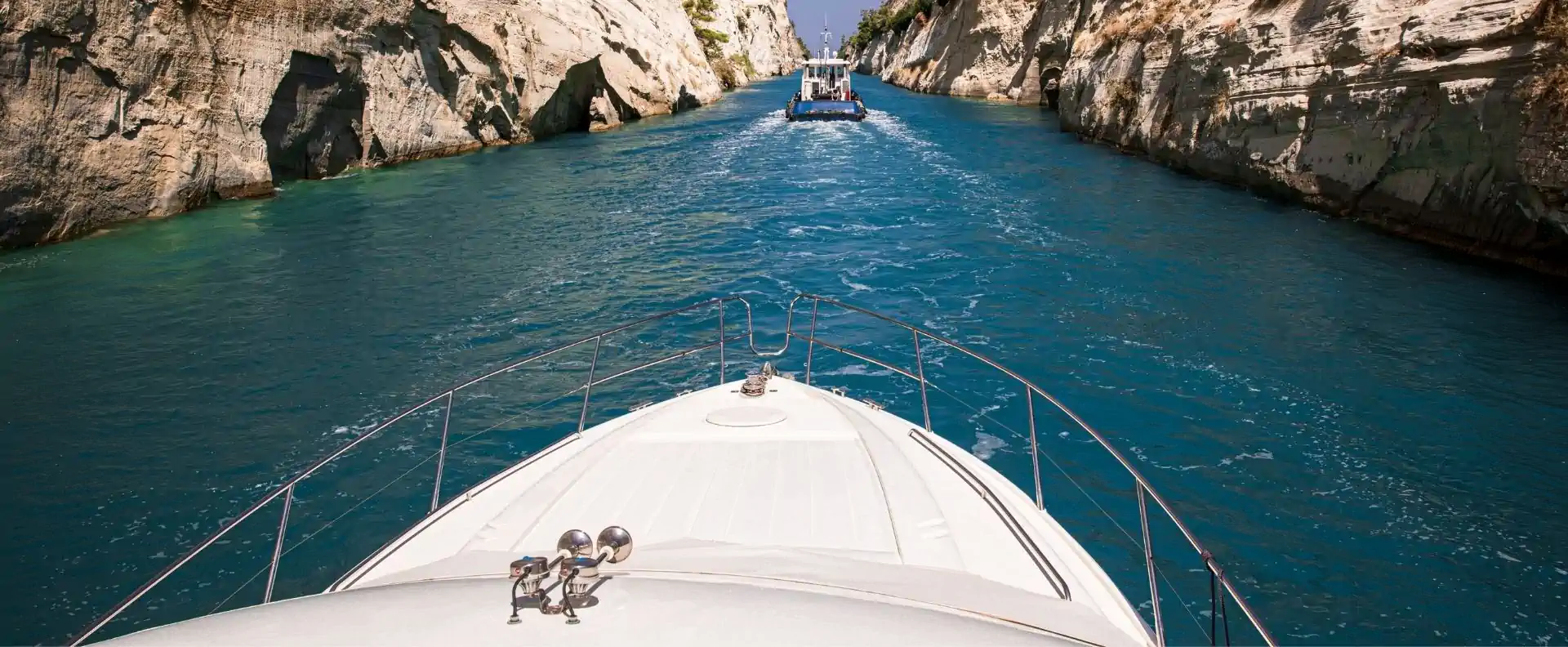
Once cleared by the authorities, yachts enter the Corinth Canal in one direction at a time. At the entrance, a submersible bridge lowers beneath the water to allow vessels to pass. However, the channel ahead offers only a limited view of what lies beyond.
As the yacht moves forward, the rock walls rise higher on both sides and the waterway feels noticeably narrower. From deck level, you experience the canal from the bottom of the cutting, where its scale becomes much clearer. In addition, engine noise and voices echo between the walls.
Road bridges cross high above the canal, with visitors often stopping to watch the yachts pass underneath. It reverses the view most people encounter.
Visitors usually look down into the Corinth Canal. Instead, those on board look up at the sky and people above.
One Seafarer flotilla took approximately 45 minutes to complete the passage, although transit times can vary. The crossing is brief, but the view from the water makes it a distinctive part of the route.
The history
A passage 2,500 years in the making
The idea of cutting through the Isthmus of Corinth is far older than the modern canal. Ancient Greeks recognised the value of connecting the two seas.
7th century BC
The Diolkos
In fact, long before large-scale excavation was possible, the Diolkos provided a paved route across the isthmus. It allowed smaller vessels or cargo to travel overland, avoiding the long and often dangerous journey around Cape Malea, a headland notorious for its storms even in antiquity.
AD 67
Nero’s canal
In AD 67, Roman emperor Nero began digging a canal, but the project was abandoned after his death.
1882
Work begins
The ambition was not realised until 1882, when construction of the modern Corinth Canal began.
1893
The canal opens
It was finally completed in 1893.
Its history has remained complicated. Unstable rock and landslides have repeatedly disrupted the canal, while wartime destruction caused further damage. Restoration and reinforcement work have continued to shape the waterway ever since.
Two seas
More than a shortcut between two seas
The Corinth Canal cuts through the narrow Isthmus of Corinth, separating the Peloponnese from mainland Greece. It links the Gulf of Corinth with the Saronic Gulf and, beyond it, the Aegean Sea. Therefore, vessels can travel between the two sides of Greece without making the much longer journey around the Peloponnese.
The canal is just over six kilometres long and around 25 metres wide at sea level. These restricted dimensions make it unsuitable for most large modern ships, while yachts and smaller vessels can make the passage.
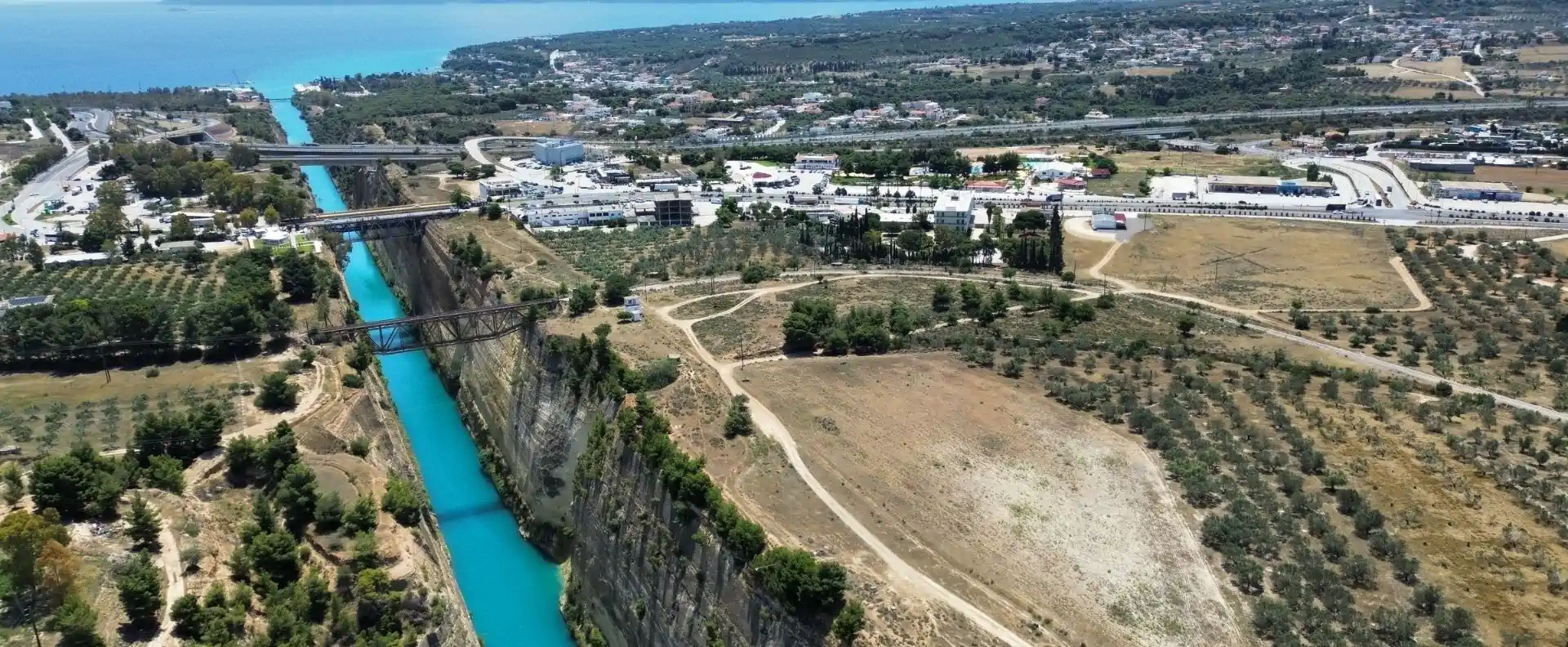
Its value lies in more than the distance saved. The canal links the enclosed Gulf of Corinth with the island-studded Saronic Gulf and Aegean waters. Sailing through it therefore feels like entering a new stage of the journey.
The route
The Corinth Canal as part of a wider sailing journey
On Seafarer’s Corinth Gulf route, the canal comes towards the end of a week spent exploring the Gulf of Corinth. Instead of a pattern of short hops between busy ports, the days have more variety, with longer stretches under sail, tighter passages, and a real sense of progression.
1
Kiato
Fly to Athens and transfer to the harbour at Kiato to join your yacht.
2
Antikyra
A fishing village and a convenient access point for the ancient site of Delphi.
3
Galaxidi
Traditional captains’ houses and excellent tavernas along a historic waterfront.
4
Trizonia
A sleepy little island with turquoise water and a small marina. Look out for dolphins on the way, as our crews spot them all the time in the Gulf of Corinth.
5
Free sailing
Your lead crew suggest options, so you can choose your own sailing for the day.
6
Corinth
The harbour of Corinth is the last stop before the canal.
7
The canal and Korfos
Transit the Corinth Canal into the Saronic Gulf, then sail on to our protected base at Korfos for a farewell meal.
About 131 nautical miles over the week. Full details on our Corinth and Saronic flotilla page.
Some crews combine the Corinth and Saronic routes over two weeks. The Saronic route sails the other way, from Korfos to Kiato, and also passes through the canal, so the transit marks a clear change between two contrasting sailing areas.
Real sailing, real conditions
Weather, sea state, and canal availability influence how days unfold, and plans sometimes adapt. Clear communication and a calm approach from the lead crew keep the focus on safety and enjoyment.
Beyond the canal
What shapes the experience beyond the canal
Sailing through the Corinth Canal is a defining moment, but it isn’t the only one that stays with people afterwards. Over the course of the route, the experience builds in layers.
Dolphins surfacing alongside the boats, turtles appearing unexpectedly, ancient sites coming into view from the water. Places like Ancient Corinth feel different when you approach them slowly, by sea, as sailors have done for centuries.
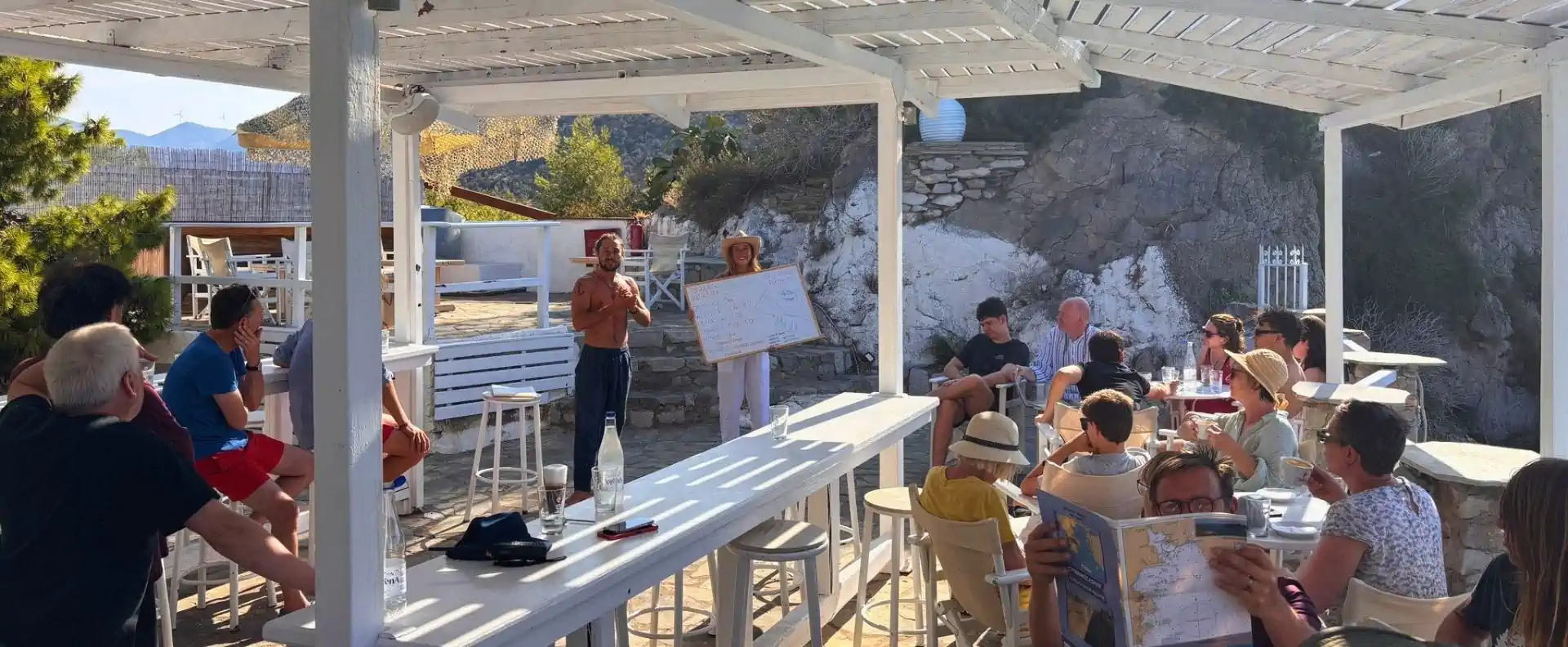
Just as memorable are the shared moments that happen almost without planning. Beach gatherings, evenings spent together in harbour, conversations and quizzes that stretch late.
Is it for you?
Is the Corinth route right for you?
It suits sailors who want a journey that unfolds over time, where days feel connected rather than repeated. It’s a good fit if you’re drawn to:
- A standout sailing moment, like passing through the Corinth Canal rather than just seeing it from above
- Variety across the week, with longer sailing days balanced by tighter passages and quieter moments
- A sense of progression, of actually going somewhere rather than circling familiar ground
- Sailing that feels involved and rewarding, without tipping into being overwhelming
- Support when it matters, without feeling managed or constrained
The passage through the Corinth Canal is brief. However, the perspective from the water remains one of the route’s most distinctive moments.
Yachts pass between immense rock walls and beneath high-reaching bridges. Finally, the transit marks a clear change between two contrasting sailing environments.
Common questions
Corinth Canal FAQs
Can you sail through the Corinth Canal on a flotilla?
Yes. Both weekly routes on our Corinth and Saronic flotilla pass through the canal. The Corinth Gulf route sails from Kiato to Korfos, and the Saronic route sails from Korfos to Kiato, so you can do one week or combine both.
How long does it take to sail through the Corinth Canal?
A typical passage may take around 45 minutes, although waiting and transit times vary.
Does the Corinth Canal have locks?
No. It has submersible bridges at either end, which lower beneath the water.
Can sailing yachts use the Corinth Canal?
Yes, provided they meet the canal’s requirements and receive permission to enter.
Is the Corinth Canal always open?
No. Closures can occur because of maintenance, restoration work or operating restrictions. Current information should always be checked with the canal authority.
What was the Diolkos?
A paved trackway across the Isthmus of Corinth, created as early as the 7th century BC. It allowed boats or cargo to be hauled overland between the two gulfs, avoiding the long and often dangerous journey around Cape Malea.
Interested?
Talk to us about the Corinth Canal and Saronic flotilla
Get your Corinth Canal and Saronic flotilla personalised quote, or call our team to talk through dates and routes.
Call or email us
Monday to Friday 09:00 to 19:00 · Saturday 09:30 to 17:00


Book with confidence. Seafarer has run flotilla holidays since 1995, and every payment you make to us is financially protected: ATOL licence 9511 for holidays with flights, ABTOT member 5660 for holidays without.