How to Choose a Yacht for Your Sailing Holiday
Sailing holiday advice · Choosing a yacht
Knowing how to choose a yacht can feel overwhelming. There are different yacht types, cabin layouts, destinations, and ways to sail, and it isn’t always clear which suits you. The good news is that there’s no perfect yacht, only the right one for you.
This guide walks you through five simple steps: who you’re sailing with, which type of yacht to choose, the right layout, how hands-on you want to be, and where you’re going. And if you’d still like help, we’re happy to recommend your perfect match.
In short
To choose a yacht for your sailing holiday, start with your group size and experience, then decide between a monohull (a traditional sailing feel, usually more affordable) and a catamaran (more stable and spacious). Pick enough cabins for everyone, plus one for a skipper if you have one, and choose how hands-on you want to be: bareboat, flotilla, or skippered. Finally, match the yacht to the destination: catamarans suit calmer seas, while monohulls handle stronger winds better.
On this page
Step 1
Know who you’re sailing with
The people on board shape every other choice, from the size of the yacht to how you sail it.
Who it suits
Couples
A smaller yacht, or a cabin charter if you’d like company and less responsibility.
Families
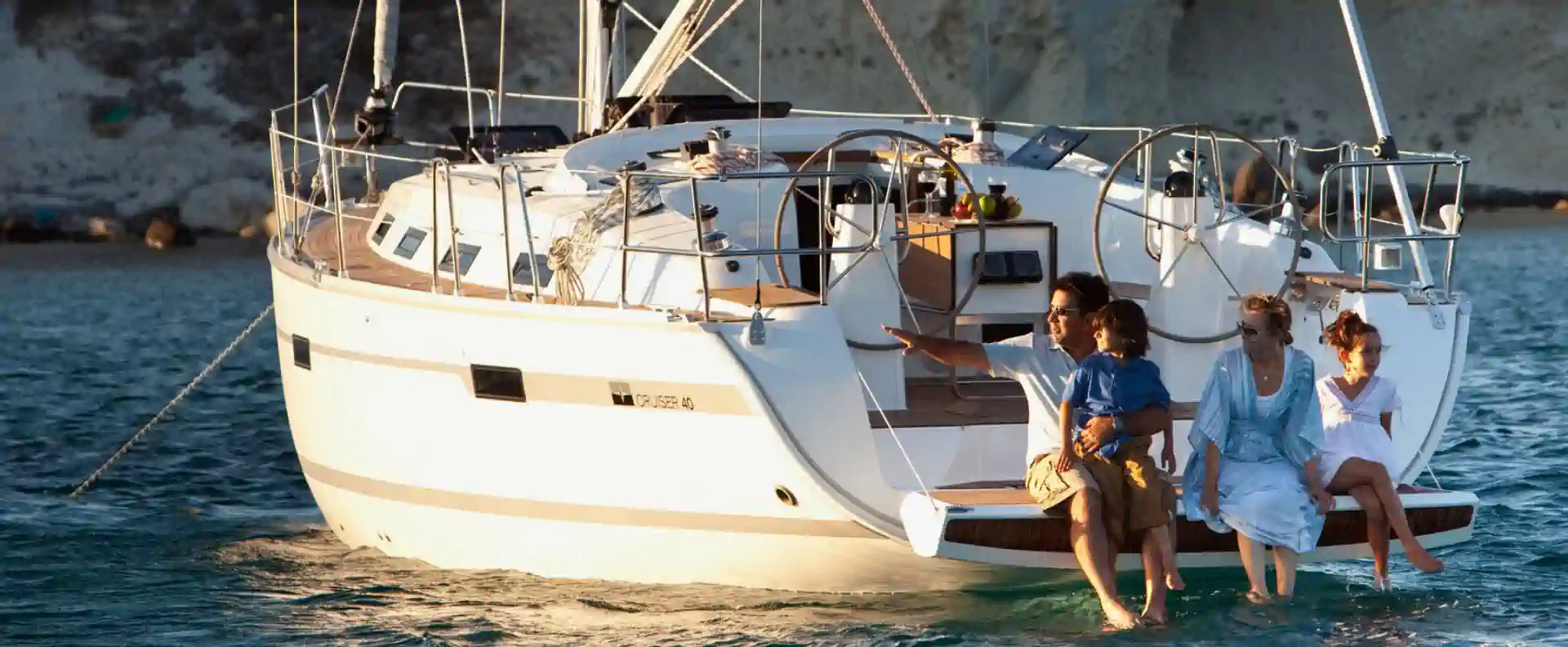
A three-cabin yacht gives teenagers their own space. A skippered charter or a flotilla keeps things relaxed.
Solo sailors
Join a shared cabin charter or a flotilla holiday and meet like-minded sailors.
Groups of friends
Count heads, then think about privacy, shared space, and comfort over a week or more.
Experience matters too. Confident sailors may prefer a bareboat charter, while others will enjoy a skippered yacht charter.
Step 2
Monohull or catamaran?
Most charter yachts are one of two types. Each has its fans, and the right choice depends on how you like to sail, how much space you need, and your budget.
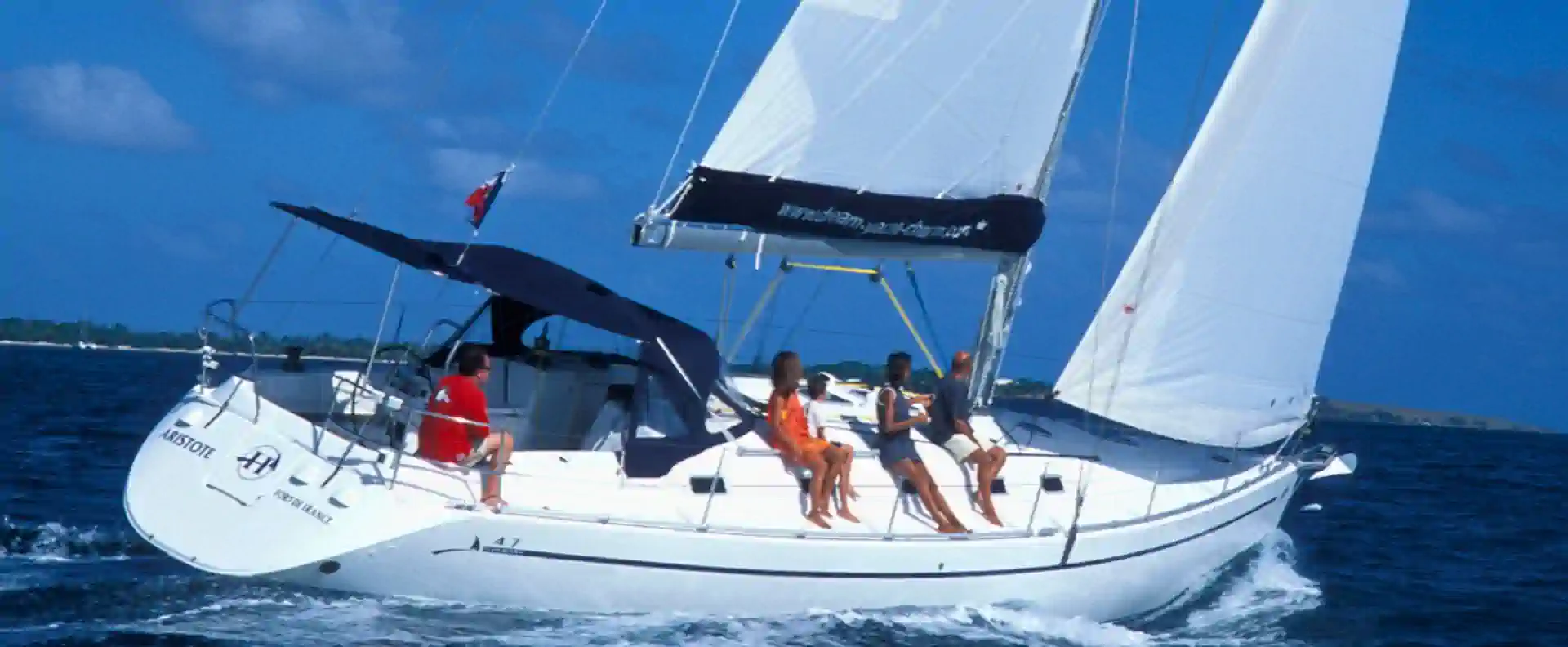
Monohull
One hull, a traditional sailing feel
- Heels as it sails, so you feel the wind
- Generally more affordable
- Handles well in stronger winds
- Suits smaller groups and sailing purists
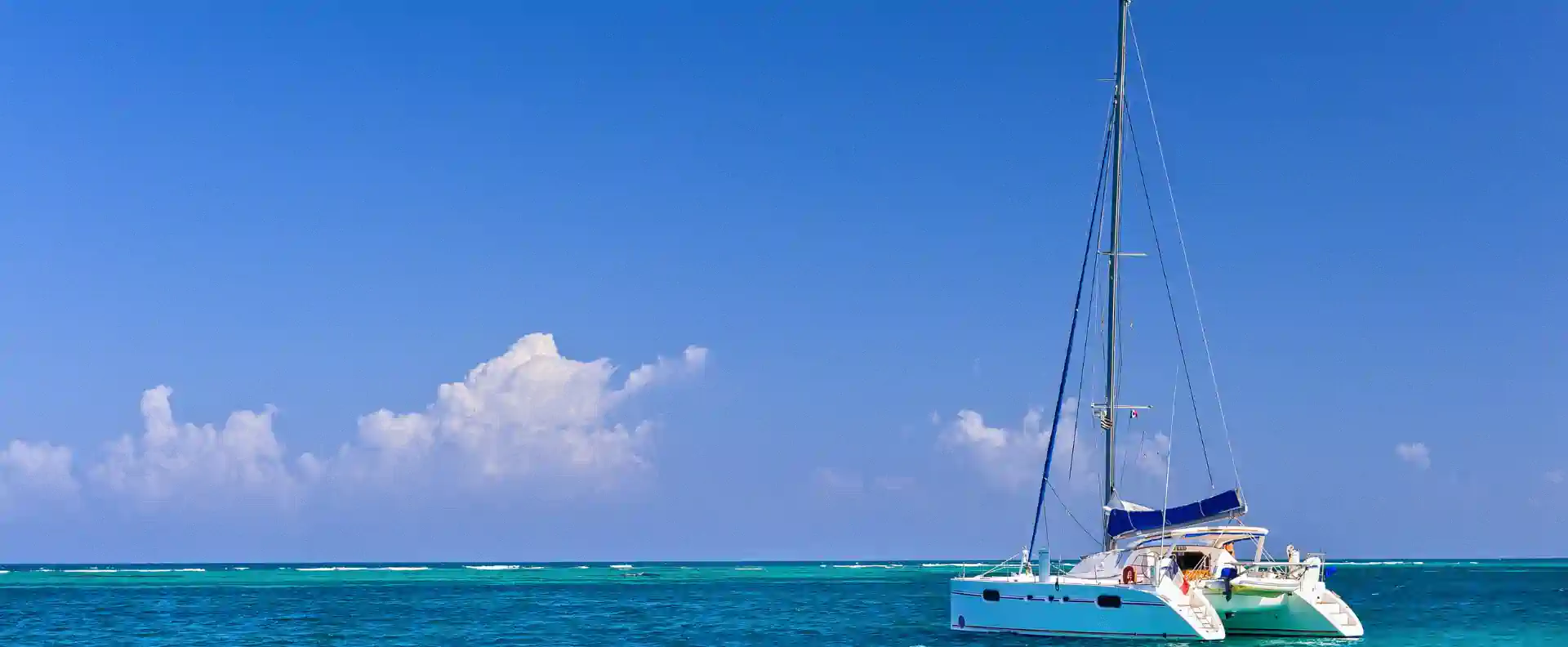
Catamaran
Two hulls, wide and flat
- More stable, which helps if you’re prone to seasickness
- More room on deck and below
- Costs more to charter
- Takes up more space in marinas, which can affect mooring fees
Moving from a monohull to a catamaran? Our guide on what changes when you sail a catamaran explains the differences. And for the sails themselves, see mainsail types: battened vs in-mast furling.
Step 3
Choose the right layout
Cabins are only part of the picture. Think about heads (bathrooms), the galley if you’ll cook on board, and the saloon and cockpit, where you’ll spend most of your time on a week-long trip.
How many cabins?
Two cabins
Couples or small families, and a relaxed cabin charter.
Three cabins
Families with teenagers or two couples sharing. Common on a skippered yacht charter.
Four or more
Larger groups who want extra comfort and privacy.
Sailing with a skipper?
Your skipper needs their own cabin, so add one to your count. Their food is also on you: budget roughly €20 a day.
Step 4
Decide how hands-on you want to be
Your experience can matter more than your budget here. Be honest about how much sailing you want to do yourself.
Bareboat
You’re the skipper
- You steer, plan, and make the decisions
- You need a qualification, such as an ICC
- Best for confident, experienced sailors
Flotilla
Freedom with support
- Skipper your own yacht
- A lead crew sails nearby to help
- Great for building confidence
Skippered
Sit back and enjoy
- A professional skipper handles the yacht
- Add a first mate and cook, or go fully crewed
- No sailing experience needed
Step 5
Consider the destination and conditions
Where you sail affects the type of yacht that suits you best. In windier areas, a monohull often handles better; in calmer seas, a catamaran gives you comfort and space.
| Area | Conditions | Best for |
|---|---|---|
| Ionian Islands | Calm seas and predictable afternoon winds | New sailors and relaxed cruising |
| Aegean Sea | Stronger summer Meltemi winds | Experienced skippers who want an active sail |
| Croatia | Balanced, varied conditions | Crews with mixed experience |
Common questions
How to choose a yacht: your questions answered
Do I need a licence to charter a yacht?
Yes, for a bareboat charter. To skipper a yacht yourself in Greece you need an ICC (International Certificate of Competence), and if you hold RYA Day Skipper, the RYA issues the ICC free to members. Some bases also ask for a VHF radio certificate. Our guide to the ICC licence in Greece explains how to get one.
No licence is needed for a skippered yacht charter.
Can I go on a sailing holiday with no experience?
Yes. Many of our cabin charter guests are first-timers, and a skippered charter needs no sailing experience at all.
Is a catamaran suitable for beginners?
Yes. Catamarans are stable and spacious, which makes them a comfortable choice for beginners, especially in calmer destinations.
How many cabins do I need?
Count your group, then add one cabin if a skipper will be on board.
Which is more stable, a monohull or a catamaran?
A catamaran is more stable, but a monohull usually performs better in strong winds.
Still not sure?
Let us match you with your ideal yacht
We’ve been helping sailors find the right yacht since 1995. Tell us your destination and group size, and we’ll narrow down the options for you.
Call or email us
Monday to Friday 09:00 to 19:00 · Saturday 09:30 to 17:00

Book with confidence. Seafarer has run sailing holidays since 1995, and every payment you make to us is financially protected: ATOL licence 9511 for holidays with flights, ABTOT member 5660 for holidays without.